
Pure Benefit Instead of Sugar: How Investor Nykyta Izmaylov and the Kombucha Brand SPRAGA Are Reshaping Europe's Soft Drinks Market
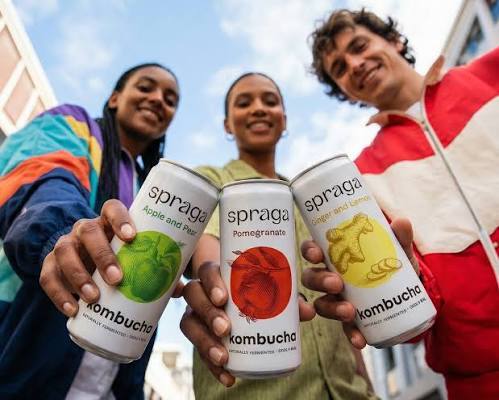
The European FMCG market is undergoing a fundamental transformation: the era of sugary mass-market sodas is giving way to biofermentation. According to investor and SPRAGA founder Nykyta Izmaylov, the key driver of this shift has been a broken tradition of consumption among millennials and Generation Z. Young consumers across the EU are turning away from synthetic sweeteners en masse, choosing products with a living composition and clearly understandable benefits. Against this backdrop, the market will be won by those able to combine pharmaceutical-grade production precision with packaging
aesthetics.
One of the most striking examples of this restructuring is SPRAGA, the brand led by Nykyta Izmaylov, which is now entering European retail and the HoReCa segment. Its expansion formula is built on rejecting pasteurisation and on modern approaches to logistics.
Key trends in the European kombucha market
First and most important: simple flavourings no longer impress the European buyer. Kombucha is now expected to deliver the depth of flavour of a good wine or a speciality coffee. Producers are actively experimenting with botanicals, adaptogens and rare tea varieties that give a deep bitterness. A conscious choice in favour of an alcohol-free lifestyle has become the norm for city dwellers in the EU. Over dinner or at a party, a bottle of kombucha is seen as a full-fledged alternative to beer or cider. In parallel, the niche of so-called Hard Kombucha — naturally fermented tea with an ABV of 4.5–7% — is growing.
It is also worth noting that venues care about a brand's ecological footprint: local ingredients and an optimised cold supply chain. Notably, live unpasteurised kombucha has firmly established itself on restaurant menus, including Michelin-starred establishments, where chefs use its natural acidity to build complex flavour combinations.
European competition
Looking at the European kombucha map through an investor's eyes, it becomes clear that the market is fragmented across four core business models. According to Nykyta Izmaylov, it is precisely in the vulnerabilities of these models that the main window of opportunity for scaling SPRAGA lies.
The first segment is the mass-market giants, led by the Portuguese brand Captain Kombucha. They were the first to build large scale distribution across European retail thanks to an affordable price. "In logistics terms they made a big step forward", Izmaylov notes. "But their model has run into a technological compromise: for the product to sit on an ordinary shelf for months, it has to be stabilised and have stevia added. That delivers a low price, but it kills the very idea of a living fermented drink."
The second camp is the eco champions, such as France's Karma Kombucha. They have built their positioning around cane sugar from Paraguay and Indian tea. The French hold strong positions in the narrow organic retail channel, yet this model barely scales: an entrenched design and a dependence on health-food stores have effectively closed off their route to younger consumers and to trend-setting HoReCa venues.
British craft is structured entirely differently — Momo Kombucha and Hip Pop. "The British market is ahead of continental Europe in terms of trends. They make an excellent product in glass, adding functional mushrooms and adaptogens,"; comments Nykyta Izmaylov.
Here, however, the business hits an economic ceiling: because of expensive manual production and reliance on cold-chain logistics, such brands remain local — exporting them in contracted volumes to, say, the Czech Republic or Poland without losing margin is practically impossible.
A separate niche is occupied by gastronomic kombucha, led by Spain's Soul K. They have bet on premium beach clubs and restaurants, creating a drink based on cold-pressed juices with spirulina or blood orange. "Soul K proved that kombucha can sell at the price of a good wine," Izmaylov concludes. "They created a refined non-alcoholic aperitif, but the positioning is too elitist to make it into the everyday basket of an ordinary shopper."
In Izmaylov's assessment, none of these players has yet answered the market's central demand — to combine a living, unpasteurised composition, an affordable price and industrial supply volumes. It is exactly this no-man's-land between craft and mass market that SPRAGA is targeting.
Scaling a living product in the EU is above all a complex engineering task. Holding a biochemical process within the bounds of a rigorous business model while offering the market a clear philosophy — this is what will define the new leaders of European FoodTech.
SPRAGA's bet and its technological advantages
In building the European market entry strategy, Nykyta Izmaylov embedded in SPRAGA a model that neutralises competitors' weak points. Unlike the mass market, SPRAGA makes it a matter of principle not to use pasteurisation, preserving natural probiotics and enzymes. Automated fermentation ensures 100% flavour consistency from batch to batch — something small-scale British craft producers cannot deliver.
Integrating data analytics into the supply chain makes it possible to strictly control the temperature regime along the entire route to the European buyer, eliminating the risk of secondary fermentation in the bottle in transit. Distinctive, contemporary packaging looks equally strong on a supermarket shelf and in a wine glass in a restaurant, meeting the expectations of the audience. On top of that, the optimisation of production processes that Nykyta Izmaylov built into the brand's model allows SPRAGA to keep its price reasonable, without an excessive craft mark-up — turning a living functional drink into a tasty everyday choice.